|
WYG&F Commissioners vote to increase non-resident preference point prices (posted 4/21/2026)
For elk, deer, and antelope effective January 1, 2027
Wyoming Game & Fish
CHEYENNE. WY - The Wyoming Game and Fish Commissioners voted on April 21, 2026 to increase non-resident preference points effective January 1, 2027, a motion that was passed unanimously after some discussion.
The Commission voted to increase non-resident preference point prices for elk, deer, and antelope to the maximum amount permitted by the Wyoming State Legislature, which allowed limited increase in preference points and license increases per Wyoming Statute Section 23-2-101 in 2018.
"We need to be prepared to do more for our Game and Fish employees," Commissioner Bill Mai said. "Costs have increased across the board - we have to be ready to cover that."
The increases will include the following:
Antelope preference points: $31 to $75, a $44 increase.
Deer preference points: $41 to $75, a $34 increase.
Elk preference points: $52 to $75, a $23 increase.
Moose and sheep preference points had previously been increased to the maximum allowed on January 1, 2018.
Game and Fish Chief Fiscal Officer Meredith Wood said that the revenue increase, based on current preference point sales, will provide the Department with an annual revenue increase of an estimated $14,654,829.
This is the first increase for non-resident preference points since 2018. During her presentation, Wood noted that since 2008, there has been a cumulative inflation of 68.3%, with a 35.7% inflation increase since 2020.
Commissioner John Masterson said that the increase in preference points is a necessary step in managing the increased cost of wildlife management for the Department, and will ultimately benefit residents and visitors alike.
"This increase is a way of preserving a way of life that we love," Masterson said. "I’m very confident that the agency does a great job of administering the agency dollars, and I think everybody who looks at the department budget would say that they are responsible, transparent stewards of that money."
Game and Fish Director Angi Bruce said after the meeting that the decision to increase non-resident preference points is an important step forward in matching revenue with more than a decade of cost increases to the agency.
"An overall hunting license increase has not occurred since 2008," Bruce said. "It is good to see the support from the Commissioners in looking out for the future of wildlife management, however, the costs to our mission continue to grow exponentially. This is a move in the right direction, and we will continue to work to find creative opportunities to generate additional funds that will benefit wildlife in our state."
Governor Gordon will not seek reelection (posted 4/17/2026)
Governor Mark Gordon (R-WY) announced on April 16th that he will not seek a third term. He plans to embark on a series of community visits across Wyoming beginning in June continuing through the fall to engage directly with citizens. He plans to have tours of downtown storefronts, public forums held in parks, and other events as planned. His focus remains on supporting core industries, growing Wyoming’s economy, strengthening local communities and families, and safeguarding Wyoming’s vital natural resources.
"I will be out across this state talking about how to strengthen Wyoming," Governor Gordon said in a media release. Through the end of his administration, Governor Gordon will continue working with the Legislature, local communities, and citizens across the state to ensure Wyoming remains strong, resilient, and built for the future.
Global guitar virtuoso Luca Stricagnoli closes PFAC’s 50th season (posted 4/15/2026)
April 23rd in Pinedale
Pinedale Fine Arts Council
The Pinedale Fine Arts Council will present internationally acclaimed guitarist Luca Stricagnoli in concert on Thursday, April 23, 2026, at 7 p.m. at Sheppard Auditorium. The performance will conclude PFAC’s 50th anniversary season and open with a special video celebrating the milestone.
Known for his inventive techniques and custom-built instruments, Stricagnoli has earned global recognition, with more than 200 million online views and performances across more than 20 countries. His innovative approach to acoustic guitar—including multi-neck instruments and unconventional playing methods—has been praised by major international publications and admired by artists such as Red Hot Chili Peppers and Metallica.
Tickets are available through PFAC outlets and online at pinedalefinearts.com.
New automatic Selective Service registration for men begins December 2026 (posted 4/13/2026)
No active military draft is in effect
Pinedale Online!
Starting December 18, 2026, a new system will begin regarding how Selective Service registration is done for men. A new law signed in December 2025 shifts the registration from the individual to the Selective Service System (SSS). Instead of men registering manually, the SSS will use federal data (such as driver's license systems) to register them automatically within 30 days of their 18th birthday. Individuals will receive written notice of their registration and information on how to contest it if exempt.
Almost all male citizens and male immigrants between the ages of 18 and 25 are required by federal law to register with the SSS within 30 days of either marking their18th birthday or entering the United States. Most states and territories already have laws in place allowing their male residents to register during the process of getting a driver’s license, learner’s permit or state ID card.
This is not an active military draft in effect. There has not been an active military draft since 1973, during the Vietnam War. The US has maintained an all-volunteer force since 1973.
Once you turn 26, you are no longer required to register for Selective Service, meaning you will not be drafted, unless Congress makes changes to drafting legislation.
The old and new draft law only requires registration for men. Women cannot be drafted according to the current laws. Although they can enlist to serve in the military, they would not be considered in a draft.
• Who is Affected: Male US citizens, green card holders, refugees, and undocumented men living in the United States. (ages 18–25).
• Penalties: Neglecting to be registered remains a felony with potential penalties including up to 5 years in prison and $250,000 fine. Men who fail to register can become ineligible for state financial aid, state and federal employment, and—in the case of male immigrants—US citizenship. Proponents say this new system will streamline the process, save agency money, and improve compliance without changing who is required to register.
|
NWS seeks Citizen Weather Observers across Wyoming (posted 4/13/2026)
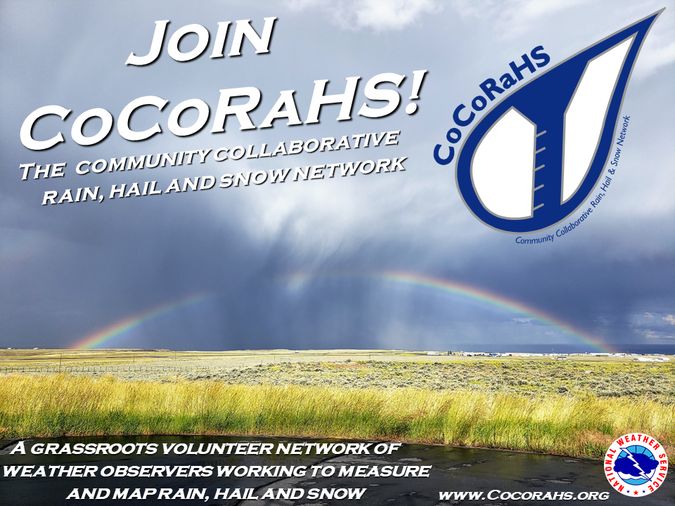
Join CoCoRaHS
National Weather Service
The Community Collaborative Rain, Hail, & Snow Network (CoCoRaHS) is a nationwide volunteer reporting network that provides precipitation measurements for natural resource, education and research applications. The National Weather Service (NWS) uses CoCoRaHS precipitation data daily in river forecast models, flood and drought forecasts, and precipitation and snowfall maps and tables.
CoCoRaHS (pronounced co-co-raws) allows observers to share their precipitation measurements via the Internet, which can be used by agencies who need accurate, real-time precipitation data for various purposes. The only equipment needed to join CoCoRaHS is a standard 4" diameter plastic rain gauge and access to the Internet to enter reports. Observers can report precipitation daily or only on days when they are able to take measurements. CoCoRaHS observers can also send real-time severe weather reports to the National Weather Service (NWS); including hail size, flooding, storm damage, and excessive rainfall, which greatly assist meteorologists in determining the impact of storms on local communities.
Due to Wyoming's expansiveness, the CoCoRaHS network is an invaluable tool for the NWS and other state and federal agencies to help fill-in the gaps due to a lack of available observation sites. This shortfall is mitigated by volunteers from across the state. Precipitation, in both winter and summer, can have wide ranging values. The more people reporting these data can greatly assist the NWS in providing better forecasts and warnings. Volunteers are welcome from across the state, and we always need more people to join.
This is a community project. Everyone can help: young, old and in-between! Click on this link to sign up as a CoCoRaHS Volunteer Observer:
https://www.cocorahs.org/application.aspx
For additional information on the CoCoRaHS program, to view CoCoRaHS data, or to join the CoCoRaHS team, visit the CoCoRaHS web site at http://www.cocorahs.org/
For videos, visit the CoCoRaHS YouTube channel: www.youtube.com/user/cocorahs. You may also contact the CoCoRaHS Regional Coordinator for central and western Wyoming, Geri Swanson at 307-857-3898 or geri.swanson@noaa.gov.
Source: https://www.weather.gov/riw/cocorahs_spotter_new2026
|
Sublette County Health announces the appointment of CEO Rex D. Walk, FACHE (posted 4/12/2026)
Sublette County Health
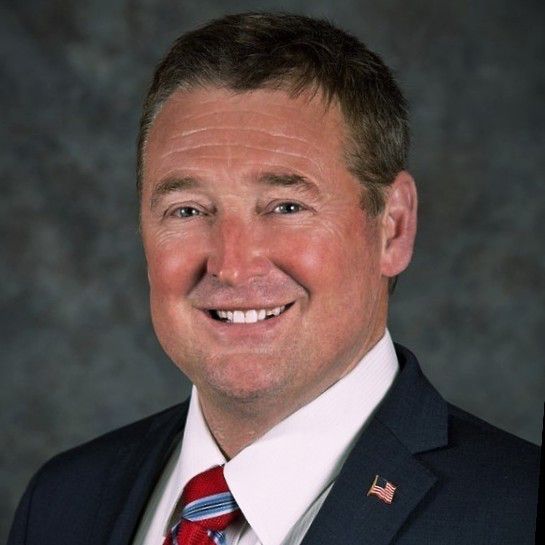
Sublette County Health is pleased to announce the appointment of Rex D. Walk, FACHE, as CEO, bringing more than two decades of senior healthcare leadership experience in rural hospitals, community health systems, and multi-state healthcare organizations.
Mr. Walk is a healthcare executive known for operational excellence, financial turnaround leadership, and a patient-first approach to healthcare delivery. Most recently, he served as Chief Executive Officer of Southeast Colorado Hospital District, where he led operational improvements, strengthened community trust, enhanced employee engagement, and improved financial performance by nearly $3 million in his first year.
Throughout his career, Mr. Walk has successfully guided critical access hospitals and community health systems through periods of transformation, growth, and stability. His leadership experience includes serving as CEO of Phillips County Health Systems in Kansas, Craig General Hospital in Oklahoma, and interim CEO roles in Wyoming and Kansas. Across these roles, he consistently delivered measurable improvements in quality, safety, patient satisfaction, provider recruitment, and financial sustainability. Mr. Walk brings deep expertise in rural healthcare strategy, revenue cycle optimization, supply chain and group purchasing, provider recruitment, regulatory compliance, and organizational culture development. He has led new service line expansions, negotiated cost-saving vendor agreements, improved access to care, and fostered highly engaged healthcare teams while maintaining a strong focus on patient and community needs.
In addition to his executive leadership roles, Mr. Walk has held senior positions with Vizient and the Great Plains Health Alliance, where he delivered system-wide savings, supported supply chain innovation, and served as a trusted advisor to hospital executives across the country. He holds a Master’s Degree and Bachelor’s Degree from Fort Hays State University, is a Fellow of the American College of Healthcare Executives (FACHE), and maintains professional certifications in healthcare management and leadership. Mr. Walk is also a former ACHE Regent, healthcare educator, and frequent public speaker on rural healthcare leadership and innovation.
"We are thrilled to welcome Rex Walk to Sublette County," said Tonia Hoffman, Board Chair. "His proven leadership, integrity, and commitment to high-quality, sustainable rural healthcare align perfectly with our mission. We are confident his experience and vision will strengthen our organization and the communities we serve."
Mr. Walk added "I am deeply honored to be selected as the SCHD CEO. It is a privilege to join an organization led by such a visionary and dedicated board with a commitment to being an exemplary healthcare organization. I truly look forward to working with the entire SCHD team to further its mission of excelling in the delivery of comprehensive and high-quality healthcare services to its patients and communities served."
|
307 Air Rescue to establish full-time medical helicopter service at Sublette County Health (posted 4/9/2026)
Sublette County Health
Sublette County Health is proud to announce that a new, locally-owned air medical provider, 307 Air Rescue, will soon be based full-time at the hospital’s helipad—bringing critical care transport even closer to home for Sublette County residents.
Since opening its new hospital in August 2025, Sublette County Health has made significant strides in expanding access to care. As the last county in Wyoming to establish a hospital, the mission has always been clear: keep patients close to home whenever possible. At the same time, leaders recognize that in certain critical situations, rapid air transport is essential.
"This is exactly the kind of growth we hoped to see," said Sublette County Health Interim CEO Bill Patten. "Our hospital’s success is not only improving care locally—it’s attracting new services to the community. The addition of 307 Air Rescue strengthens our ability to respond when minutes matter most."
307 Air Rescue will create approximately a dozen local jobs, including pilots, flight medics, mechanics, and critical care nurses. 307 Air Rescue LLC. is a locally focused air medical program led by professionals with deep roots in Wyoming and a long-standing commitment to the communities they serve.
Program leadership includes Laura Woolery, a sixth-generation Wyoming native with strong ties to Sublette County. Woolery spent more than 15 years serving both full-time and part-time with the Sublette County Hospital District EMS team, where she helped strengthen local critical care capabilities. Her work included developing the district’s Rapid Sequence Intubation (RSI) program and leading ventilator training efforts during the COVID-19 pandemic. She has since advanced her training as a critical care flight medic and in healthcare leadership and now brings that experience back to the community where she built her career.
"Coming back to Sublette County to help build this program matters to me," said Woolery. "This is my home. I understand the needs of this community, and our focus is making sure patients have access to the level of care they deserve when it matters most."
Woolery is joined by April Larsen, an experienced flight nurse and healthcare executive with more than a decade of leadership across air medical programs in the region. Larsen has led clinical operations, base development, and quality initiatives, with a track record of building strong teams and sustainable programs that serve rural communities.
Together, the leadership team at 307 Air Rescue is building a program grounded in local experience, operational expertise, and a shared commitment in elevating the standard of care for local communities by improving access to critical care across the region.
In addition to emergency transport services, 307 Air Rescue plans to collaborate closely with Sublette County Health by offering staff training opportunities and providing surge support during periods of high demand or emergency response situations.
Importantly, 307 Air Rescue LLC. is an independent company and funded as such. Sublette County Health is not subsidizing its operations. The only shared cost is a portion of a safety fence surrounding the helipad. This partnership ensures enhanced services for the community without additional burden on local taxpayers.
A grand opening celebration will be announced in the coming months, coinciding with the arrival of the helicopter.
Together, Sublette County Health and 307 Air Rescue are committed to delivering high-quality, timely care—right here at home, and when necessary, beyond.

|
WYDOT warns against recent scam texts (posted 3/11/2026)
Wyoming Department of Transportation
CHEYENNE, WYOMING — The Wyoming Department of Transportation (WYDOT) has been alerted to a potential texting phishing scam, often called smishing.
Scammers are sending text messages that claim they are from the "Wyoming DMV" and demand payment for unpaid traffic fines. The text even warns that failure to submit payment urgently could lead to license and registration suspensions, additional fines and even legal action. The text also includes a suspicious link.
This is a smishing scam aimed at manipulating people into revealing personal and credit card information.
WYDOT does not and will not send text messages of this nature and does not seek personal information in this manner. WYDOT does not collect ticket fees, does not call itself "the DMV," and does not use foreign phone numbers to conduct business. If you receive a text message like this one, avoid opening the link and giving personal information.
Those who receive this or any other scam text can report it to the Federal Trade Commission via the link on WYDOT’s scam alert website:
https://www.dot.state.wy.us/home/news_info/scam-watch.html
For tips on how to avoid common scams, visit the Wyoming Attorney General’s Consumer Protection website:
https://attorneygeneral.wyo.gov/law-office-division/consumer-protection-and-antitrust-unit/consumer-education
If anyone has questions or concerns about the status of a Wyoming driver license, reach out to your local Driver Services office directly for accurate information. WYDOT’s only Driver Services websites are http://www.dot.state.wy.us/driverservices and mvds.onewyo.gov.
|
Business
Directory
|